Showing posts with label Ayurvedic Medicine. Show all posts

What is Akik? How to make Akik Bhasam? Benefit of Akik Bhasam.

Introduction:-

It is a type of mineral stone. It is of four types in white, blood, blue and yellow. They have the best white character. In the opinion of Hakimon (Greek physicians), the red one is the best. It comes from Bombay, Banda and Khambhat. Many of their varieties also come from Yemen and Baghdad. 
Akik is very good Ayurvedic Medicine

Purification Method:-

  • First Method
Stir in a fire with aqueous stone and extinguish it 21 times in rose water, this stone will blossom and become soft. 
  • Second Method
It is purified by extinguishing a piece of aqueous on fire 4 times in Triphla-decoction.

Akik Ash Method:-

After making the fine powder of Akik, purified in the above-mentioned blood method, make extracts of rose or gheekumari (Guarpatha) juice. After drying, it is consumed by closing throttle in gumput and blowing three times in Gajput. Then, basting this ash in cow's milk, make tinkies, dry it and burn it in Gajput, after tying the tablet in milk, it is consumed by giving it in the gazput, so keep the tablet as empty as possible if there is some space left in the compartment. This makes the ash very soft. 

Quantity and Proportion:-

Give 1 to 3 ratti, morning-evening, with honey or butter according to the disease. 

Properties and Uses:-

        It is beneficial in all types of heart weakness, heat, ophthalmology, blood pressure, blood disorder, brain disorder etc. It is best to use it for paternal disorders. 
        Its ashes are heart and brain strengthening and vata-bile destroyer. Due to its intake, there is a relief in enlarged spleen and liver disorders. It is capable of destroying hysterical craze, fainting, old and dry rashes, all types of bleeding, blood leaks, old gonorrhea, wounds and stone. Applying it to the eyes increases the eyesight. By consuming it, the semen thickness and the body productive power increases. It destroys many diseases by different proportions. Its most common Anupan is Honey. It is special use for Vata and spleen disorders. If blood comes with a spit, its behavior is beneficial to stop it. Apart from the regular use of Akik, it is considered beneficial in heart diseases also by mere touch. For this reason, many cardiologists give to wear a loket of akik. 

Akik Pishti Making:-

Finely crush Akik in the imamdaste and scrape it in rose water for 10-12 days continuously. Then filter it with fine cloth, dry it and keep it safe. It pleases with ashes. 

Properties and Uses:-

 It is beneficial in blood pressure, physical heat, and fever heat, weakness of heart etc. The remaining  properties are similar to the above consumed.


What is Asbestos (Abhrak bhasma)? Types and benefits of Asbestos.Indiacation of good Asbestos and Sterilization.

Introduction:-

It is often found on mountains. Asbestos of white, brown and black is found in India, in the coal mines around Hazaribagh and Giridhar in Bihar province and Raniganj in Bangal. It has mines in Chirtor, Bhilwara in Rajasthan. It is found in mountains in large dhokas(Places) frozen at the bottom. When cleaned, it folds out like glass. Its leaves can be separable from transparent, soft and easy. In Ayurveda it is calculated in maharas. Vajrabhak (black mica is used to make Bhasma. It is very useful because of its special content of iron in Euphoria.
Asbestos Ash is very Beneficial

Types of Asbestos:-

According to Ayurvedic opinion Asbestos is of four types with the distinction of Panak, Dardur, Naag, and Vajabrak. Putting then in the fire makes the asbestos leaves bloom and the one who makes a sound of a frog (turr-turr) by putting asbestos into fire is called "Dardur", and one who leaves put like snake to put asbestos in the fire is called "Naag", and asbestos which is does not changes its form by putting it in the fire and does not make any sound is called "Vraj". 

Indication of good Asbestos:-

Asbestos which is of the best black color, smooth to touch and shiny in appearance, and whose leaves are thick and open easily and which is heavier than 10 gm, is the best Asbestos.  

Asbestos Purifying Method:-

Bring small pieces of black stone-free and weighty Asbestos and make small pieces and then heat it in the fire, and it it is red enough then weave seven times in cow-urine, triphala decoction and cow's milk. Wash, dry and crush in imamdaste in the back water and make a fine powder. 

Statement

It is especially good to wash the purplated Asbestos after putting it in water for two-three days. 

Second Method:-

Stir Asbestos and extinguish it seven times in the juice of Sambhalu (Nirgundi), Asbestos is purified.

Third Method:-

Quench the Asbestos and extinguish it seven times in a decoction of plum, then dry it and keep it in the hands and then it is purified. 

Asbestos Sterilization:-

Asbestos ash is the same good and special quality, which does not shine. To remove this radiance, Vaidyas give many cuts to many processes, but the glow does not go away. Due to the glow of ash, the patient's intestine are cut, the blood starts coming in, the heal increases immensely and other disturbances start happening. So patients and physicians get upset about this glow. To remove this glow, a simple device is suggested, which will make Asbestos free in one to two puts. 

Method:-

Old jaggary 51, sora kalmi 52, mix both of them with some water and mix them together then mix 52 sher pure Asbestos in it and fill it in the pan. Cover the mouth of the hand from the top with a lid and place about 10 seers of charcoal on the iron mesh of the omnipotent furnace or on the iron mesh of the brewery. Put charcoal on the bottom and place asafetida on the same coal (Keep one horse at a time). Putting on the heat, because of the fastness of the heat, sora will come out of the hand with a sound, there is nothing to fear and sometimes Sora doesn't even fly.

Asbestos Maran:-

  • First Method
Dissolve the Asbestos extracted from the above method with juice of mudar(Madar) leaves and make tablets. When the tablet become very dry then put the samput in Gajput and blow it, giving three such puts will consume red color. Use it in all diseases.  
  • Second Method
Grate the cereal in 24 hours worth of Aak milk and make small round balls, wrap it in leaves of Aak and close it in the sand, and burn it in the Gazput. After being material is cold, remove and then put it in the milk of Aak in the same way. Giving 7 such pots with milk of Aak and three pots with the decoction of bud hair makes the best ash of Asbestos in 10 puts.
  • Third Method
 Dry the powder of Asbestos in onion juice and grind it, then close it in the syrup and blow it into the Gazput. In this way, 21 put in onion juice, 7 put in Giloy juice and 7 put in milk of Aak and 7 times after putting it in the molasses syrup, it is best to consume Asbestos. 
NOTE:- Asbestos Bhasma is made from 400 to 600 gm together and it is very good to be consumed. 

Asbestos consumed according to disease:- 

  1. In Dysmenorrea :- Give Asbestos bhasma with honey mixed in powder of peepal and turmeric. 
  2. In Tuberculosis:- Give gold bhasm quarter ratti (or Verk) mixed with ghee and honey in Sitophaladi Churna or Chawanprashavaleh. 
  3. In Blood Pressure:- Give Asbestos ash with jaggery or sugar and myrobalan churan or cardamom churan and sugar together with saurus. 
  4. Increasing the Internal Power:- Consume gold or silver quarter or vark with powder of small cardamom and honey or butter. 
  5. In Hemorrhoids:- Mix cinnamon, cardamom, cobra saffron, bay leaf, dry ginger, peppers. chillies, amla, myrobalan, teaspoon sugar or sugar candy or with honey. 
  6. In Hepatic Dysfunction:- With Gurcha Sattva and sugar candy and give it with honey. 
  7. In Diuretic:- Mix cardamom, bunions, ground-gooseberry powder and sugar candy with milk. 
  8. In Chronic Fever and Confusion:- Give mix the powder of pipalmool with honey. 
  9. To Incresing the Low Eye Sight:- Give Triphala, Harada, Bahera, amla powder with honey. 
  10. In Ulcer Destroy:- Give the powder of murwa with honey. 
  11. To Increase Strength:- Give mix the powder of vidarkand with the milk of cow's milk. 
  12. In Plaintiff:- Give mix pure powder or Nishoth powder with warm water. 
  13. In Acidity:- Give Amla powder with one and half masha or amla juice with 10 ml. 
  14. In Muscle Weakness:- Give Asbestos bhasma, mix 1 ratti with makardhwaj half-ratti and mix with butter or cream.
  15. In Heart Diseases:- Give Asbestos ash 1 ratti mixed with pearl pishti 1 tatti and Arjun bark powder 4 ratti with honey. 
  16. For Anorexia Disease:- Give garnish dry ginger powder or dry pushkarmul bharangi and asangdh churan with honey. 
  17. In Bile Disorder:- Give mix the powder of cinnamon, cardamom, bay leaf and cobra saffron along with sugar or sugar candy. 
  18. In Cough Disorder:- Give it with honey in the powder of kayphal and pipali. 
  19. For Stone :- Mix cardamom, bunions, ground-gooseberry powder and sugar candy with milk.
  20. In Astham:- The patient becomes very weak when breathing disease become chronic and a little greasy white phlegm on coughing it comes out and a little hard work causes sweat. In such a condition, it is very beneficial to consume Asbestos ash by mixing honey with pipple powder or by taking 10 gm chyawanprash with fourth ratti gold ash. 

What is Sulfur(Gandhak) ? Types and Names of Sulfur. Some spesfic uses of Sulfur.

Introduction :-

In Ayurvedic chemistry, the number of sulfur comes after Parad (Mercury). Actually, Combination of these two (Sulfur , Mercury) is essential for the chemical medicine creation. Ayurvedic chemical therapy cannot be conducted without their combination. These two cannot do as much work while they are alive, as they doing amazing work together. With this, the name Parvati Raj of Shiva, semen and sulfur of Mercury proves meaningful. Therefore, the description of the sulfur is as written after Mercury
https://liveayurveda2019.blogspot.com/
Types of Sulfur

Types of Sulfur and Name:-

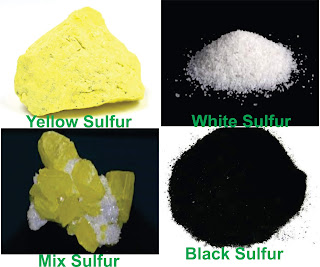
There are three types of Sulfur. The first of these is red like a beak of a parrot. The second one is yellow, it is medium. The third one is white, it is medium. Some people believe that Sulfur is of four types (white, blood, yellow and Krishna varna). This white Sulfur is called Khatik because it is like a Chalk and it is used for coating. And the Sulfur which is yellow in color is called olfactory sulfur. Another distinction of this is "Dried". It is best for chemical work. The Sulfur that resembles a beak of a parrot is used to make gold and silver metal. And the black color Sulfur is destroyed of slightest death. In the present time, it has become extremely rare to find red and black Sulfur. 

Name of Sulfur:-

Sulfur, Gandhak, Sukhpachha, Sugandhak (beautiful gandhwala), Shulvaripu (it kills copper, Hence its name is Copper Enemy). Pamari (destroying pam itching), naveentak (also now a day called Nauniyan or nuniya Sulfur)

Suflur Defects:-

Heat, Leprosy, confusion and biliary diseases are caused by the consumption of Sulfur. And the form, force, semen and health is destroyed. Therefore, it should be used only after purifying. 

Pure Sulfur Types:-

Put the melted butter in an iron vessel and set it on fire. When melted, put the coarse powder of the melted powder in the melted butter. Add the milk to the Sulfur as it melts. Later, remove it and wash it with warm water and dry it. use it in all diseases. 
Note - It is often seen that small rocks and sand particles are also found in the Sulfur. So when the sulfur melts in the pan, tie a clean cloth over the milk. Put the sulfur on the cloth, so that only the sulfur should be put in milk and the pebbles and stones should remain in the cloth above all. In the same way, brinders are also better treated with Bhringrajasava or Triphala decoction. According to the opinion of some Acharyas, by doing this refinement 3 to 7 times, there is special purification. 

Properties of pure sulfure:-

Pure Sulfur is good in chemicals and sweet in juice and bitter in baking. It cures scabies and Leprosy. By nature it is warm and fire-lamp and digestive. Removes the intestine and is its absorbent and it is the evil of destroying and purifying the bad stool. This is semen for Mercury, that is, it increases its curative power. Worm and spleen are perishable. Sattwarpa - (Just as sattva is extracted from other metals, it does not, however, it itself is subjective) and is ejaculatory. 

Remedy to remove sulfur smell:-

Cook the Sulfur powder in 8 times the milk so that it becomes thick. Then adding hulhul juice to it, after cooking it slowly, put it in a decoction of Triphala and wash it with warm water. 

Some specific uses of Sulfur:-

Mix sixteenth part trikatu (dry ginger, peppers, chilli) powder in pure sulfur powder and then fold it finely in oil and spread a clean, clean cloth, spread the ball on it and fold it carefully to make a bundle type. Wrap that style with thread. Now hold this bundle with a extractor or tweezers and place it in a glass vessel at the bottom and flame in the fire. In which the bottom of the brimstone is dripping, after the cloth bundle burn, filter out the oil that is in the vessel and keep it in a good bottle. "It is also called Gandhakdhruti".

Properties and uses:-

If you take 3 drops of this oil and juice and vermillion with 3 rattis and mix it in the betel leaf with your finger, its helps intestinal fire. Acute caries, pandas, rashes and respiratory diseases are destroyed. Colic, painful duodenum and amazirn are also destroyed. 

In Leprosy

Take equal quantity of pure Sulfur and black pepper powder and take the saggun triphala with Sulfur and mix it together. Leprosy is destroyed by consuming this powder with the boiling of the root of pudding root or self. 

In Sehuan

Sidham(Sehuan) is destroyed by mixing Sulfur and Yakshawar in mustard oil. 

In Goiter

Grind Mercury, brindle, madar milk, rock salt and turmeric and apply the paste to the goiter's knot. This process relief the goiter knot. 
or
Mix pure Gandhak 4 ratti in 3 masha Tirphala powder and take it with cold water in the morning or evening and take 21 or 41 days

In Hikka 

Taking pure Mercury and Sulfur in equal portions and dissolving it in a copper vessel, consuming kajjali made with betel juice and honey, destroys all kinds of Hikka. 

In Blennorrhagia

In pure Sulfur is mixed with 1 ratti, 4 rattis jaggery and jaynti juice then the disease is destroyed.

In Pimples

3 Masha mix pure Sulfur powder in 20 gm mustard oil and keep it in the sunlight. Allow one day of sunlight. Massage with this oil on the second day after sitting in sunlight. Similarly, old pimples, blood disorder etc. will be destroyed by doing it for one week and the body will become beautiful. 

In Strangury

Taking 1, 2, 3 rattis seeds of pure Sulfur, cumin and big kateli respectively, after taking fine powder and drinking it with horseradish, the Strangury is destroyed. 

In incurable Gout

Pure Sulfur 10 gm, dry ginger 20 gm, nishoth 30 gm after grinding it finely ginger, bricuta, triphala, by kneading it continuously for 3 days, making gram equal tablet, raking every evening and morning with lite warm water. Gout(Rheumatism) disappears in 3 month. 

Statement

Sulfur is thermodynamic. Therefore, during its consumption period, oil, jaggary, red chillies, garlic, rye, garam masala etc. should be avoided in the hot nature things and eating milk, ghee, sugar, wheat porridge, rice or barley bread is beneficial. 


Why the need for the rituals of Mercury? Number of Mercury rituals.

Introduction:- 

        The number of impurities or minerals in the Mercury rite are inherently poison, vhini, and mal - these 3 doshas reside naturally. Consumption of mercury containing these doshas leads to death, sorrow and unconsciousness respectively. Mercury, glass and Vang - these doshas are compound, meaning that these doshas originate in mercury from the mine or business people mix these two metals in mercury. Consumption of mercury containing these doshas produces sensible and leprosy. In addition, there are secondary doshas. They originate from land, mountains and water. 
        Kanchuk doshas originating from translucent land cause leprosy. Mountainous, water-borne birth defects, cataracts, vatatadhi and glass and vang dosha produce many types of diseases, therefore, to get rid these defects, mercury should be purified by octal. 

Number of Mercury rituals:-

        In rasratnsamuchyadi texts, there are descriptions of 18 rites of Mercury. But the author of the scriptures, Rudraymal etc. is of the opinion that for Dehisidhhi(Physical use), only eight rituals should be performed by the practitioners of Mercury. The remaining 10 sanskars are used in Swaradi (chemistry, iron accomplishment) work. Therefore, we will also mention eight sanskars here as:

      1. Svade, 2. Mardan, 3. Murchchhan, 4. Utthapan, 5. Patan (upliftment, sublimation, obliquation), 6. Bohdan, 7. Niyaman and 8. Revelation. 

Statement:-

Many methods of these sanskar are described in Rasasastra. Among those which can be done easily by all people, we are giving such a method here. 

  1. Savedan (sved) rites:- Take Sixteenth part of the mercury for the sacrament, each with dry ginger, peepal, chilli, rock salt, rye and chitrak, finely crush them all by crushing them, then dissolve the above powder and mercury in the kharal with the juice of radish and dry ginger. Even it is necessary to make a ball. Then put the shells in four strong hygienic cloths, tie the bundle and hang this sphere (in a dola machine) in a clay-filled earthenware and climb it on the stove and savedan for three days. If the Kanji is reduced, then put it again, after sweeping, wash and separate the mercury with hot kanji. Keep in mind, the bundle should be in the middle of the kanji and only above the bottom of the handi and the handi should be wide-mouth, so that the bundle should come easily in it. Since the pot in large, the belly of the handi should also be large. Benefit of the Savedan rituals:- According to scriptures of Ras system, Bhavaprakash etc. By the Svayan-sanskar, the defects of mercury are relaxed, the laxity goes away and mercury becomes intense. 
  2.  Mardan rites:- Sour the sixteenth part of the mercury from the rites mercury and separate the powder (house smoke, brick powder, curd, jaggery, rock salt and rye) each with a powder. Then put the powder and liquid in the mortar with the powder and after three days, wash the pan with hot kanji and separate it. Benefit of the Mardan rituals:- The outer stool of mercury is destroyed and purified by the Mardan sanskar.
  3. Murchchhan rites:- Pouring mercury with Triphala and Chitrakamul powder with each shodshansh of powder, soaking it for 7 days in the tone of Aloe Vera, destroys mal-dosha, agni-dosha, toxin-dosha, thus mercury can be used simultaneously and separately for all the above mentioned liquids, Scavenging becomes a ritual of separation. Benefit of the Murchchhan rituals:- Stool and poison of mercury are destroyed by murchchhan rites.    Mercury the glutinous liquids etc. in four folded cloth and tie them with a strong string or strip. Now take a handkerchief or pan. Fill half the written quath or sawras etc. in it and put a strong wooden or iron ban in the neck of the pan one by one on both sides. Now tie the pot of this medicine properly in the middle of this wooden or stick and hang it in bottom. Put this pot on the stove (fire) and cook it. The device made with this method is called "Dola Yantra".  In the Dola Yantra, if you want to smell a liquid object like mercury, then do not put it the empty cloth, put it like mercury, then do not put in the first bhojpatra, then put it in a cloth and make a pottli. Pottli fluid should be hung is such a way that the liquid of the pot remains half above and half below the vessel. In this way, as the fluid decreases, the pottle should also be loosened, when the liquid part becomes dry then the pudley should be removed. Many Vaidyas make a law to put a bottle or lid of the pot on the mouth of the hand to deliver pottali properly. This makes the savedan is better.  
  4. Utthapan rites:- From the above sculpture ritual, Mercury becomes Pishti. Therefore, it should be utthapan to bring it back in its tone. This utthapan is performed in many ways. As:                 1. Put the decayed parsha in the mortar by sculpting it and shove it with the kanji for one hour in strong sunlight, then when dry well, grind it like powder and filter it with hot water and wash it with warm water. 2. Put the spoiled mercury in the mortar and garnish it with the juice of Jambiri lemon for three hours in the sunlight and filter it with a cloth and wash it with warm water. This causes the rise of Mercury. Statement: After filtering with cloth, separate the powder which is separated from the powder, keep it aside and mix the powder in the form of fine particles in the powder by blowing it upwardly by separating it and then separating it, bringing it into the mercury and keeping it with hot water. 
  5. Patan rites:- In kharl, put the hoarded mercury three parts and one part of Tamr powder, then both make a circle by milling them till the lime juice is able to be formed. If the sphere is not fromed, add a little bit of pure gum and rub it, it will surely becomes a sphere. Put the sphere in the pot and keep the mouth of the two pots closed with multani mitti and dry it by placing the second equally wide pivot on the mouth of the pot. Soil should also be applied in the outer subdivision(Pendi) of the hadica (handi) below. Then, put this damaru yantra on the stove and light it with three strikes mid-fire. Fill cold water in a vessel nearby. Soak 4 fallen clothes in it and keep changing it again and again to bring coolness to the upper pendulum. In this way, the mercury blows from the bottom and sticks as small particles in the inner part of the upper caldron. After disguise, gently remove the machine, open its joint, clean the upper mercury with brush, then filter it with a clean cloth. 
  6. Bodhan (Inspiration) rites:- In the same way, the Sanskrit mercury becomes powerless due to the Sdhena, Mardan, Utthapan and Patan rites, so this Bodhan Sanskar is done to bring strength back to it. As:    Put the mercury in a caldron and cover it with sandhavan salt, mixed with lemon juice, and put some water on the mouth and close the mouth and apply the sand, Later, by placing it in pit on the top of it equal to the land, giving it a small shape becomes "Bodhan Sanskar" and mercury becomes full of power.   Other method: Applying banquet to a thick cloth of four folds, making a pot of mercury in it and smearing sand salt mixed with water in a Dola Yantra also helps in deciphering of Mercury. 
  7. Niyaman rites:- The Bodhan Samskara performs the "Niyaman rites" to remove the versatility of the mighty mercury. Its purpose is only to remove the versatility of mercury and fire. For this : Sraddhi, Tamarind, sterile, kakoda, bhangra, dhatura and nagarmotha with a syllable or boiling of a day, eliminates mercury agility and makes Mercury agnasti, such is the view of chemicals. Statement: The Decoction of medicine like Sarpakshi etc. should be taken sixteen times from Mercury. 
  8. Deepan Sanskar:- Mercury gets sedated by two Tola instruments from kanji and chitrakamul decoction for three days. The rite increases the strength of the mercury. Statement: After doing the Deepan Sanskar, by flipping the Mercury a week in jambiri or kagji lemon juice.  By keeping it, its gets better, this is our experience. 


How much Distinction and name of Mercury?

Introduction:-

Due to its origin in many places, there are five distinctions of Mercury principal names-Ras, Rasendra, Soot, Mercury and Mixer. Such are the name of God Shiva, so many names are also of Mercury. Because there is such a mention in the scriptures. As:

  1. Ras:- The color of this type of mercury is red. It is devoid of all types of defects and chemicals. By the use of the mercury, the god becomes free from disease, old age and death. 
  2. Rasendra:- It is innocent by nature, dark (black and yellow), rough and very clean. Nagdev was a little freed from death and death due to this paradise. Due to use of this mercury, human do not become immortal, so the good covered this well with mud and stone. Since then, both Ras and Rasendra become rare for humans. 
  3. Soot:- The mercury called soot is yellow, rough and mixed with defects. It is used for body and iron accomplishment when purified by 18 rites.
  4. Mercury:- It is fickle and white in color, nowadays it is found as a mercury and many types of medicines are made by purifying it. 
  5. Mixer:- The mixer mercury is shiny and thin like a feather of a peacock. It is also used only on purification by 18 rites.
Ayurveda

The inclusion of other metals in Mercury:-  

         Just as Yogiraj, enlightened in Shivamurti, attains salvation, similarly the suvarnadi metals are absorbed in the mercury deposited by asbestos. Sattvic-bases of herbs are absorbed into the glass. Similarly, the glass gets absorbed in bang, bang in copper, copper in silver, silver in gold and gold in mercury. Just as all living beings become enlightened in Bhrama, similarly all Rasadi metals get absorbed in the mercury. 

Dimerit of Mercury:-

          1. Naag (Glass), 2. Bang (Ganga), 3. Mal, 4. Agni, 5. Fickleness, 6. Venom, 7. Giridosh, 8. Asehmlishosh (To bear fire, fly by heating on fire). These eight Mahadosha live in paradise by nature. There are many opinions about the disadvantage of mercury. In the Text 'Rasendra Chundamni' and Ras Prakash Sudhakar' five natural defects have been written of mercury and other seven and other three natural defects in some texts. 

Explaining the merit of mercury:-

          The natural mercury and there Ras-Karpooradi compounds are dahk venom, Other metals are also found in the mercury obtained naturally, to show the three defects located in the natural mercury-it is written in books like Rasratnasamujachaya etc. 
           In the unclear mercury, the mark from the defective been considered to be original and defective due to the coincidence of Dahk and Dhatwantar due to the defects. 
           Consumption of mercury or such mercury compound containing these two causes death, sorrow and fussiness. 
           Even today's scientists believe this. In Ghosh's "Materia Medica", it is written in the tittle "Acute Toxinfection" (Intantaneous poison-toxin effect) that "Mercury compound especially in Ras-Karpooradi (Corosive Sublimate), Ras Pushp (Kelomal, Sudhanidhi Sama) and Mugdha Rasa (Grant Powder) give a terrible feeling to the body. Due to which vomiting, purgation, colic, blood presure, faintness and finally death also occur. 
           That is why in our ancient Rasashastra full arrangements have been made for the rituals of mercury, so that these defects are destroyed and the combination of matter produces curative and potent properties.
           The poison-effect of mercury is natural. When mercury escapes from mines, Sankhiya and Antimani also accompanies from there, they both poisonous and also flighty. Therefore, while purifying, must also try to remove their impurities.
           Two compound doshas are also believed to be Naag and Vang in Mercury. As:
These are also fine from modern point of view. Ghosh's book titled "Materia Medica and Therapeutics" states that impurities of lead, tin and other metals are also found in mercury.
           Regarding other metals, a scholar named Ladder Brand has written in his treatise called "Pharmacology Therapeutics and Materia Medica" that other defects can be Nag (lead), Arsenic (Sankhiya), Antimery (Srotogen). It is clear from these quotes that other metals are found in mercury. Therefore, assuming mal-dosha is absolutely true.

Saptkanchak Dosha of Mercury:-

In the addition of above mentioned defects, Saptkanchak Dosha is also considered in Mercury. 
What is Saptkachak dosha? 
Sampratik- The examination of chemistry and mineralogy shows that mercury is often heavier than all metals. When it combines with other metals, it is called translucent mixer. In the state, the metals found inside the mercury are usually spread as a cover over the mercury. These types of cover are called "Kanchak".
           Mercury kanchuk doshas are well described in the oriental and westernised manner in "Rasatarangini". As:
           The mixer of mercury is released under extreme pressure, that is, the mercury comes out differently, often on the basis of this knowledge, Ayurvedic rasists have described various types of remedies to purify the mercury. 
           Mercury is generally found with Bang, Suvarna, Tagra, Silver and iron according to the article "Latin Gabor" and then with Mercury, Yashad, Naag, Bang metal according to the authors. Melts hard with iron. 

What is Mercury in Ayurvedic language? Origin of Mercury.

Introduction:-

         Whatever our ancient Acharya has written after searching on the subject, it is literally true. Even nowadays, realistic scientists of the new age have not yet been able to get knowledge after work tirelessly. Many truthful scientists have praised our Acharya's with the help of their masters by proving themselves directly from the evidence. 
         Our Sage-Maharishi was a realist of all three types of knowledge, spiritual, semi-physical and semi-spiritual. In this subject, almost all countries have same opinion of the present day. The Western scholars of today, considering the elements of our Maharishi-created formulas very well, started investigating every substance on the basis of that. The result of which is that he getting enough success in this work and he raised his mind all over the world. But despite being the progenitors of the rebels, we are not using the testimonies of our great men and are not doing anything for the rise of our sciences philosopher, it is very sad. 
        Of all the mineral substance that comes out of the earth, mercury is one such substance which is obtained in liquid form on ordinary temperature. The form of the mercury is similar to that of molten silver. This is why scientist has also called it "Quick Silver".

 Mercury

Receipt of Mercury:-

        Mercury is found in various ethnic water bodies and igneous stone blocks of various forms. For example, Renushila, Mritika-Stone, Sudha-Stone, Sphatikashila, etc., the names of igneous rocks like water and volcanic lava etc. can be written. Apart of this, both of them are also found in other stone blocks devoid of virtue. But most of the igneous stone in found near the blocks. 
        For the deposition of translucent minerals, it is known that when igneous rock in the geology becomes progressively cooler, it transforms from its liquefaction to a dense state. At that time hardy minerals which are presents in their inner part fly away in vapor form and get deposited in the crevices of the adjacent blocks. Among the lesser minerals are also minor. The reason is that even today, mercury is found near the farms of hot water. 
        The famous American geologists ' Rensam' and 'Spur' scholars believe that Mercury is always found near the volcanic rocks. But there is a difference is this because the famous mine in the country called 'Spain', which is in the place called Almeden, is very ancient according to the geomancy and it is found at a depth of 300 feet. Similarly, there are mines of California, New India and New Almeden in the United States, they are not related to the origin of Jwalamukhi, and these mines are in the depth of 2200 feet. 
        In this way, despite many differences, all the geologists have agreed that from the interval of the earth geowomb, along with the hot water has appeared on the earth. Therefore, with its minerals, it gets deposited mostly on the earth. The warm water with which Mercury comes out, whether the water has gone out into the warm part of the earth by rain and again comes out as a hot source or it has come out from the Himalaya heat source, but it is proved by many evidences that in the form of natural mercury dissolved in alkaline solutions or in open terrain with alkaline solutions. natural mercury and translucent mineral Hingul etc. is frozen.

Origin of Mercury:-

       The genesis of Mercury in the Ratnasamuchaya etc. Rasastras is described in a mythological manner in a mythological way, the summary of which is as follows.
       On the bank of the Ganga River, there were hundred time long five wells of mercury produced by Mahadevji's semen, two of these wells, which were consumed by God and the snake became free from death and old age. Then they filled both those wells with mud and stone, by the use of mercury in the remaining three, humans too become free from death and disease, having the same age as the gods. Enraged, Indra prayed to Mahadev ji. Satisfied with which Mahadevji, with the desire of indra, covered the parched of the remaining three wells with seven kanchukadi doshah. Since then there is so special benefit from the use of mercury without performing the rituals.

Mercury Minerals:- 

  1. Hingul (Sinavar):- Red hingul is a main mineral to extract mercury, similar to the flower of hibiscus. It has a bright light colour. It is a compound of mercury and sulfur. It has the same colour as that of Javakusum (hibiscus flower). In the end, this "red sulphide of mercury" mineral is the Hanspada hindul of Ras-Shastra. Generally, it is obtainable in loose or granular nature of the clay. Sometimes its raves are also found. Rubbing it on the ceramic test draws a red streak. It has two distinctions 1. Ankylosing 2. Pravahlabh, in which first is rasraktsamuchchy 'Darad' and the other one has another name, which is called 'Korelene Artz'. It means coral soil. This types of hingul occurs in the country of Italy.
  2. Chmraar:- This is the mineral hingul of krishanvarna. Its chemical organisation is similar to that of blood hingul. It is found in the form of clay and small particles. Rubbing these particles on the test of ceramic makes for a lot of streak. It is bright to see. Clay has lower gravity than particle. This is described in Ras Kamadhenu as "Chmraar: Krishnavarna: Syat".
  3. Heerakghuti (Kelomal):- It is a 'Ravadar' mercury mineral with a diamond-like light. It is called mercurous chloride or Kelomal. 
  4. Natural Mercury:- It is obtained in very small amounts. Sometimes its particles are found scattered with the mineral hingul. It is found in mines of Spain and Italy. This is the secondary mineral of mercury. 
  5. Silver Mercury:- It is found in varying amounts of mercury ans silver in nature. Mostly it is found in Chilean countries mines. Apart from this, it is also found in the mines of Germany, Spain and America. 
If you want to test for any of the above minerals, then do the following. 
       In a glass tube, the powder of polluted minerals, which is to be tested and four or soda of food and by heating it on the spray-lamp, particles of mercury will be seen in the cold area of the tube. If the minerals of mercury are mixed with mercury and sulfur, then in the cool region of the tube red hungul and mercury will be seen and the smell of burning sulfur will also appear. 


Some Sign language in Ayurved Like "Deepan".

Deepan:-


The fluid which illuminates the gastaragli but does not digest the main contain, it is called "Deepan".
Ayurvedic medicine process

Some Sign language in Ayurved Like "Digestion".

Digestion:-

The fluid which is digest the main diet but does not illuminates the gastaragli , it is called "Digestion"
like Naagkesher.

There are many such substance that have "Deepan" and "Digestion" both qualities.
like Chitrak

Some Sign language in Ayurved Like "Sanshaman".

Sanshaman:-


Which fluid does not quenching from the Vaata, Pitta and Kafadi defects and does not reproduce, but quenching the accumulated fault, it is called "Sanshaman".

Like Giloy
Ayurvedic medicine process

Some Sign language in Ayurved Like "Anuloman".

Anuloman:-

The fluid which is cooked the undigested stool and drain it out of the body by the underpass. It is called "Anuloman".

Some Sign language in Ayurved Like "Santrasan".

Santrasan:-

The material which is thrown out of the body by the downstream without cooking the raw stool. It is called "Santrasan". Like Cassia pulp
Ayurvedic medicine process

Some Sign language in Ayurved Like "Incision/Bhedan".

Incision/Bhedan:-

The substance make the stool thin-thick or pindakaar throw incision/bhedan and drain stool into underpass. It is called "Incision/Bhedan".

What is Measure/Value definition in Ayurvedic Medicine Prepration?

Introduction:-

          For making the Ayurvedic medicine the measure and value knowledge is necessary. Because in that process the volume of herbs is not proper then the medicine will also not fully effective. So in this blog explain the Measure/Value. 
          In Ayurvedic sciences Magdhiy and Kaling two things are mentioned by distinction. Being in this both measure Magdhiy measure is best so Vaidya is more use of it measure. But its weights is very difficult due to unattainable things. Hence Vaidya used to Tola, Chhatank, Serr, Mana, Bats. But now their practice according to government law has ceased. And in their place, the introduction of new penitentiary systems like milligram, gm, kilogram, kivantal etc. Vaidyas should also use it. So are giving comparative correspondence.                       

Measurement of Herbs


                                    According to Sharangdhar
                                                  Magnetic Values
1 Trasrennu = The particales of the dust blowing of sun soming in the room with small window is called "Trasrennu".
6 Trasrennu, Dhwanshi or vanshi = 1 Marichi
6 Marichi = 1 Raai
3 Raai = 1 Sarso
8 Sarso = 1 Barley
2 Red rice = 1 Barley
4 Barley = 1 Ratti or Gunjja
6 Ratti = 1 Masha
4 Masha          = 24 Ratti = 2 Shaann, Mashak, Hem dhanyak
2 Shann          = 48 Ratti = 1 Drakshan, kol, Gadhaann or Vatak
2 Drakshan    = 4 Shann =
                       = 96 Ratti = 1 Karsh
2 Karsh           = 2 Tola = 1 Palardh, Shukti
2 Palardh      =  4 Tola = 1 Pal, Mushti, Bisv, Chaturthika
2 Pal               =  8 Tola = 1 Prasriti, Prasrat
2 Prasriti       = 16 Tola = 1 Anjali, Kudav
2 Anjali         =  32 Tola = 1 Manika Sharab or Ashtpal
2 Sharab       =  64 Tola = 1 Prasth
4 Prasth        = 3 Ser = 1 Aadak, Bhajan, Kanspatr
4 Aadak         = 12 Ser   = 1 dronn, Kalash, Ghat
2 Dronn         = 25 Ser = 1 Soorp, Kumbh or Chatushashti Sharab
2 Soorp          = 51 Ser = 1 Vaahi, Gonni, Bhari or Dronni
4 Dronni       =  204 Ser = 1 Khaari
100 Pal               = 5 Ser = 1 Tula
20 Tula             = 100 Ser = 1 Bhaar


                           Maan Definiation According to Sushrut
12 Udad = 1 Suvarnn Mashak = ( 1 Masha)
16 Suvarnn Mashak = 1 Karsh = Suvarnn = 1 Tola
19 Nishpav = 1 Dharan
2 Dharan = 1 Karsh( Tola)
4 Karsh = 1 Pal = 4 Tola
4 Pal = 1 Kudav = 3 Chh. = 1 Tola
4 Kudav = 1 Prasth = 12 Chh. = 4 Tola
4 Prasth = 1 Adaak = 3 Ser = 3 Chh. 1 Tola
4 Adaak = 1 Dronn = 12 Ser = 12 Chh. 4 Tola
400   Karsh = 1 Tula = 5 Ser
20 Tula = 1 Bhaar = 100 Ser
                                         
 Herbs 


How to make Lime Water for Ayurvedic Medicine?

Introduction:-

Take 243 mg good dry lime piece, put it into the green vial which have 5 times water after that put the stopper in vial mouth and keep in it cool place after well shake. After 9 hours mixed water filter with filter pepper and fill it into clean green vial safe. This lime water used in Ayurvedic medicine manufacturing.

kwath Preparation

What is Sauveer? How to prepare Sauveer?

Introduction:-

Take barley with rind, grind it, cooked it with 8 times water when the half quantity of water remains then put into the clay pot and tied the pot face with cloth, when the fluid become sour filter it with cloth. It is called "Sauveer".

kwath Preparation

How to make Tushamboo?

Intorduction:-

Take grinned barley including rind and put into the clay pot without cooked add 4 times water and tied the pot face with cloth and keep pure airy place, when the fluid is become sour then filter it with cloth and fill into the vessel. 

How to make Kanji?

Introduction:-

Take rice and cooked it into the water after that put it clay pot with 3 time water. Tied the pot mouth with cloth for seven days, when it become sour then filter it and use it.

kwath Preparation


How to prepare Tinctures/Surasawa?

Introduction:-

Take a vegetation things powder and put it into the fresh pot with water for seven days. After that filter it with cloth or filter and keep it into vial. To make Tinctures with a modern method, take  vegetation powder and put it into parkoletar with rectified spirit for 24 hours or more, after that time filter it with cloth and fill it into vial. It is also a good method. 

kwath Preparation

How to make Asawa-arishta?

Introduction:-

Quath, swaras and water etc. liquid things added vegetation fluid powder, sugar, jaggery or honey and to make good Asawa mix some kinv, put this mixture into clay pot or ceramic pots or teak wood casks which is proper layers inside with ghee, tied the cloth on its face and keep it pure airy place. After the some time check it again and again that fermentation stop or not. When the fermentation are be stop and all the material is sitting down then filter it with cloth, after that mix jatamasi, black pepper and put into the ceramic pots which have air tight lid. If the air enter into the ready Asawa-Arishta then it becomes defective.

Interpolation Standard:-

Where there is no proof of fluid in the Arisht, there 12 kg, 750 gm quath, water etc liquid things add jaggery, sugar or honey 4.5 kg and add interpolation liquid 467 gm. Drakshasava, madhukasava and khajurasava already have sugar so add only 3.5 kg sugar. 

Vinegar:-

If the Asawa-Arishta is become defective and sour or cane juice etc. sweet juice become sour then it is called "vinegar".


How to prepare Snehpaak-Kalpana?

Introduction:-

Take Ghee, Oil etc. cooked with quath swaras, milk-water etc. fluid vegetation and with vegetation kalk. The pure Ghee and Oil etc. is ready which have three types. In which paak piece is like a fluid, it is called Mrudupaak, which paak excluding with fluid like halwa and not stay on the vessel, it is called Masdhypaak and in which paak is sitting down in the vessel and also difficulty in removing it, that paak is called Kharpaak.

kwath Preparation

Contact Form

Name

Email *

Message *

What is Conch (Clamshell)?? How to purified the Conch by diffrent method? Its Properties and Uses.

Introduction :- Conch (Clamshell) is found all over India. It has three species of white, red and yellow. It is written in Ayurveda that...